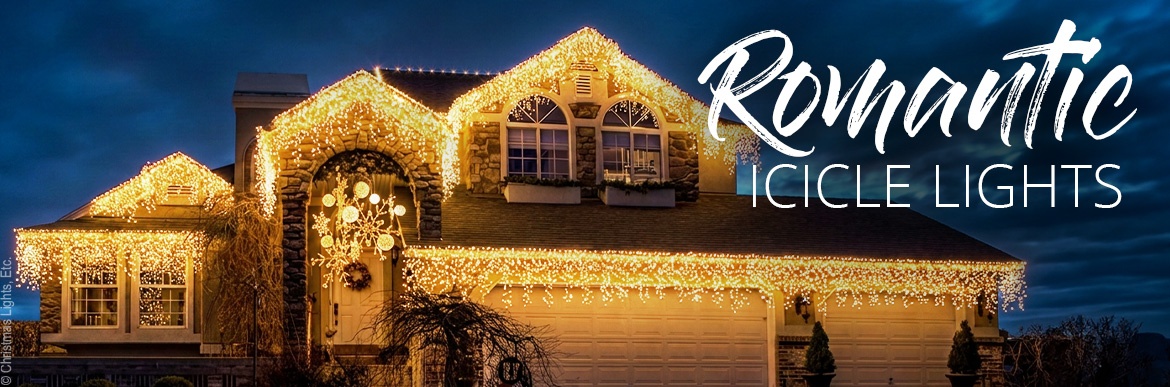
Traditional icicle lights use incandescent bulbs to produce the warm glow that's been hanging from gutters for decades. Available in clear, multicolor and other colors; white, green and black wire; with extra bulbs that enable blinking. Indoor-outdoor rated and end-to-end connectable.
Traditional vs LED Icicle Lights
One of the most common questions we get about icicle lights is whether to stay with traditional incandescent or switch to LED icicle lights. The straightforward answer depends on what matters most to you.
Traditional incandescent icicle lights cost less upfront, produce warmer, more subtle light, and offer the color rendering that many people associate with classic Christmas displays. They also run warm to the touch during operation and draw more power per strand. A typical incandescent icicle set uses roughly five to seven times more energy than a comparable LED set. Rated lifespan is also shorter: incandescent bulbs run approximately 3,000 hours, compared to 100,000 hours for LED.
LED icicle lights run cool to the touch, connect up to 45 sets end-to-end from a single outlet, and offer a wider range of display effects, including SoftTwinkle® slow-twinkling. If minimizing seasonal electrical draw or running a very long roofline from fewer outlets is a priority, LED is the practical choice.
If the warm incandescent glow — or the specific color rendering of traditional multicolor — is what you're after, traditional is the way to go.
Clear Icicle Lights
Clear traditional icicle lights produce the classic warm white glow of incandescent bulbs. The warmth is created by the filament itself, which means it's inherent to the light source. For eaves and rooflines, clear incandescent icicle lights look warm and inviting from the street, with a soft halo around each bulb.
White wire is the standard choice for clear icicle lights on most home rooflines — it blends into gutters and fascia during the day and disappears against the eaves at night once the lights are on. Green wire is available for installations along hedges, fences, or darker wood trim where white wire would stand out.
The lights hang in random drop lengths from a main strand running the length of the set. Our incandescent sets cover either 5 or 8.5 feet of lighted length (depending on the size you order). Traditional incandescent icicle lights connect end-to-end, though the connection limit is lower than LED — 3–5 sets per outlet is typical for incandescent. For long roofline runs, plan to use multiple outlet locations before hanging, to prevent overloading any one circuit in your home.
Multicolor Traditional Icicle Lights
Multicolor traditional icicle lights use color lenses over incandescent filaments to produce rich, saturated reds, blues, greens, and yellows — the palette that defined the classic Christmas light aesthetic for generations. Because the glow comes from a heated filament behind a tinted lens, the color output is warm with a distinct hot spot that's distinct from the purer, more uniform output of multicolor LED.
For many people, multicolor incandescent is specifically what they remember from displays growing up. The color lenses on incandescent bulbs scatter light differently than LED counterparts, and the slight variation in brightness across the strand gives the string a distinctive character. In our experience, multicolor traditional icicle lights are most often chosen by customers restoring or matching strings from an older display, or simply chasing the particular warmth of the vintage incandescent look.

Pro Tip:
If your roofline display requires more sets of traditional icicle lights than can be safely connected end-to-end from a single outlet, the solution is additional circuits — not a longer chain. Identify a second outdoor outlet on a separate circuit, start a new run from that point, and meet in the middle. Most homes have at least two outdoor outlet locations, often on opposite sides of the house, which is usually enough to cover a full roofline run without exceeding any set's end-to-end limit.
Frequently Asked Questions:
Are traditional icicle lights still made? Yes. Traditional incandescent icicle lights remain in production. The format — random-length drop strands with incandescent bulbs on a main eave-running wire — hasn't changed materially in decades, and consistent demand from shoppers replacing aging displays or preserving a specific look keeps them popular. Our selection includes clear, multicolor and other color options.
Which is brighter — LED or traditional icicle lights? LED icicle lights produce higher lumen output per watt and, particularly in cool white, a crisper and more high-contrast look from the street. Traditional incandescent produces a warmer, softer glow with lower overall light output but a color temperature many people find appealing.
Do traditional icicle lights get hot? Incandescent icicle lights produce heat as a byproduct of the filament — the bulbs run warm to the touch during operation. They are UL-listed for indoor and outdoor use and are built for seasonal installation, but incandescent lights should be inspected for damage before each season. They run notably warmer than LED icicle lights, which remain cool to the touch throughout operation.
How many traditional icicle lights can I connect end-to-end? Most traditional incandescent icicle light sets are rated for 3–5 sets connected end-to-end from a single outlet. The exact limit for your set is printed near the end connector or on the packaging. For longer roofline runs, plan outlet locations before hanging — if your run requires more continuous strands than the limit allows, use a separate outlet for the next section rather than chaining beyond the rated count.
Are traditional icicle lights rated for outdoor use? Yes. Our traditional icicle lights are UL-listed for both indoor and outdoor use. They're designed for seasonal outdoor installation and rated for rain, snow, and temperature variation. Standard installation best practices apply: use outdoor-rated extension cords and inspect all cords and sockets for damage before each season.
What's the difference between traditional and LED icicle lights? Traditional icicle lights use incandescent filament bulbs, which produce a warm glow and run warm to the touch. LED icicle lights use solid-state light emitting diodes — cool to the touch, drawing 80–90% less energy, connecting up to 45 sets end-to-end, and rated for 100,000 hours. Traditional is less expensive upfront. LED is the better choice for long roofline runs, lower operating cost, and wider display options including SoftTwinkle® slow-twinkling.
How do you hang traditional icicle lights on gutters? Snap Christmas light clips onto the lip of the gutter — no nails or tools required. Start from the end nearest your power outlet and work outward, spacing clips 6–12 inches apart. Feed the main eave wire into the clips so the drop strands face downward and outward. Before hanging, gently stretch each drop from top to bottom — drops are packed tightly in shipping and may appear shorter than their listed measurement until they relax. One standard set covers 5 to 8.5 of linear feet of lighted length (depending on the size you order).





