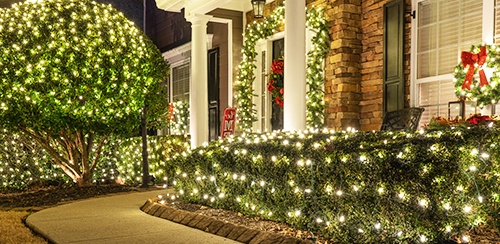
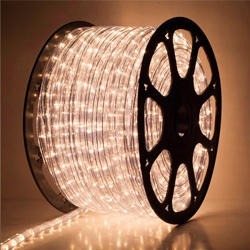
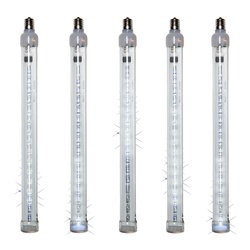
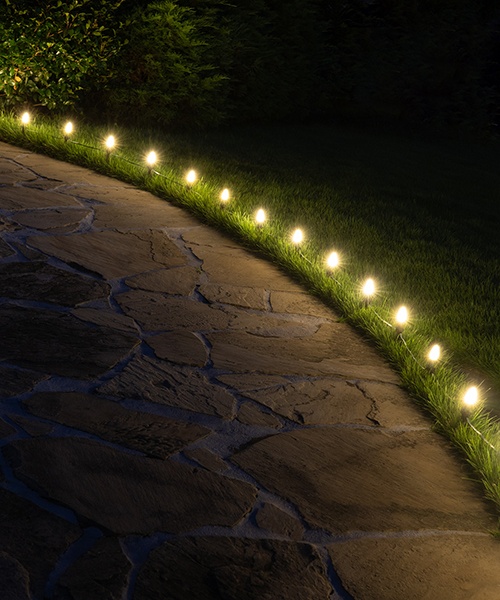
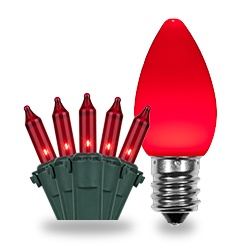
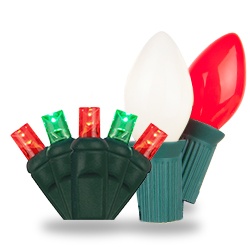
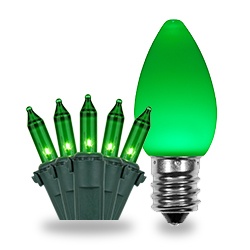
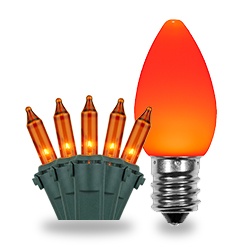
Choosing Christmas lights starts with what you're lighting and the look you want to achieve. C7 and C9 bulbs light rooflines and trees; mini lights wrap trunks and fill wreaths and greenery; net lights drape over bushes and hedges; icicle lights hang from gutters and eaves; rope light outlines railings and windows; pathway lights line walks and drives.
Where to Buy Christmas Lights
The real variety in Christmas lighting never reaches the shelves of local big-box stores. That's because carrying that kind of diversity for a one-month selling season is difficult, so the aisles fill with similar products competing mainly on price and you get what you pay for. The products show up around Halloween and vanish just as fast, often before Christmas Day.
Specialty Christmas lighting retailers work differently. At Christmas Lights, Etc, we stock the full range of Christmas lighting products year round commercial-grade sets, replacement bulbs in every size and finish, lighted stars, motifs and light balls, and the clips, stakes and cords that hold a display together.
Christmas Lights for Every Budget and Display Size
Christmas Lights, Etc stocks thousands of lights and decorations for every kind of project — from a first display to a commercial installation. A first display might be one tree, a porch railing and a wreath, with a few strings of mini lights and the clips to hang them. A commercial installation covers rooflines, mature trees and public spaces, and calls for sets that connect end to end, bulbs that can be replaced individually, and hardware built for weather and repeated seasons. Most displays sit somewhere in between. Even the smallest can use the same commercial-grade product as the largest.
Getting Started With Christmas Lights
A Christmas light display starts with a simple question: what do you want to light? The roofline, the walkway, the shrubs by the porch, the mantel and the tree are the most common answers. Each surface narrows the choice to a few product types. Don't worry, no product names needed yet. The five tips below cover what to consider once you know what you're lighting.
5 Christmas Light Tips You Should Consider Before Buying
1. Start simple, think long term.
A display grows over years, not in one season, so the first plan can be a short one. Lights and decor that work in more than one place, and last more than one December, let each season build on the last instead of starting over. That costs less over time than replacing a cheap set every year, and it gives you more to work with each season.
2. LED vs incandescent.
A 2017 Christmas Lights, Etc survey of nearly 2,000 people nationwide found that 66% preferred LED Christmas lights. LED lights draw up to 90% less power than incandescent, so you can safely run longer lines of light. Incandescent gives the classic glow that has lit displays for generations. The choice is still yours. Both work outdoors and neither is the wrong answer, though larger displays are easier to build and expand with LED.
3. Plan for outdoor weather.
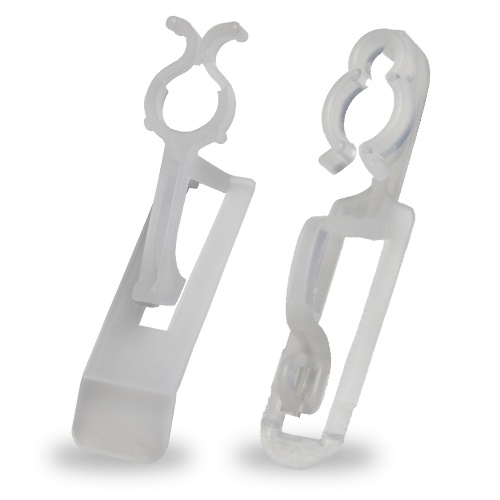
Moisture and electricity don't mix. Outdoor Christmas lights need a rating for both indoor and outdoor use, and accessories built to hold them: clips for gutters and shingles, stakes for walkways and beds. Staples pierce wire insulation and shorten the life of a set. Clips that come off cleanly in January are clips you can use again next December.
4. Spot quality Christmas lights.
Quality shows in the details. A shatterproof bulb survives the ladder and the storage bin where glass or cheap plastic does not. Most lights fail where the bulb meets the base: C bulbs with nickel-plated bases resist corrosion and connect cleanly, and on LED mini lights the bulb and base are molded as one piece to keep moisture out of that joint. Full-wave rectified engineering eliminates the flicker of cheaper lights and holds a steady, even glow. These are the features that separate a display that performs for decades from one that doesn't make it through a single season.
5. Remember what it's for.
A Christmas display is one of the few things in life people still make for strangers. It draws people together: the neighbors who slow down, the kids in the back seat, the walkers who take the long way around the block. That holds for a single lit wreath as much as for a whole-house display that takes a weekend to install. Christmas lights and decorations are a gift you give to everyone. That's what makes it so special.
Quick Guide To Christmas Light Products
It's good to be an informed shopper. This quick guide should help.

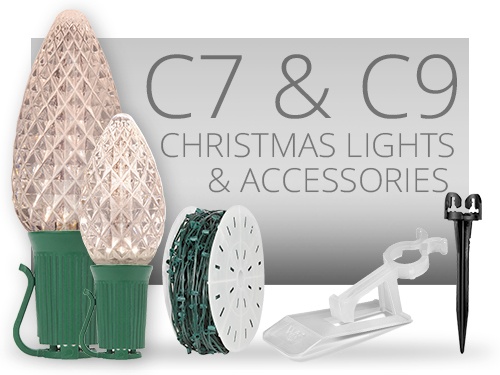
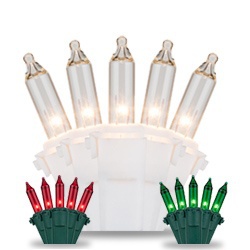
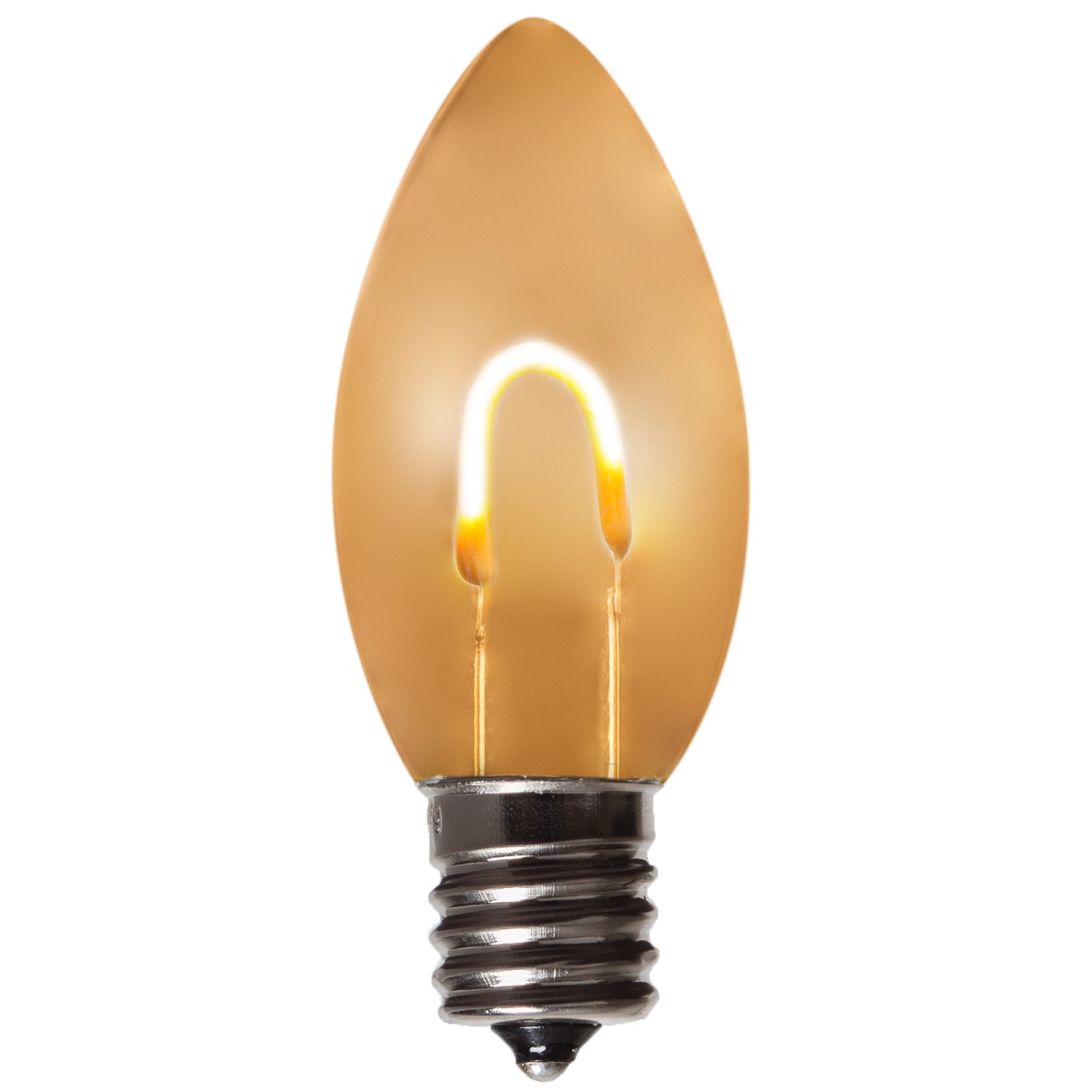
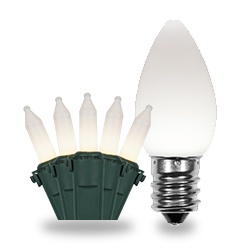
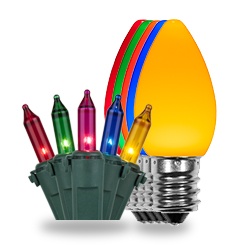
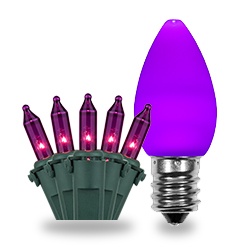
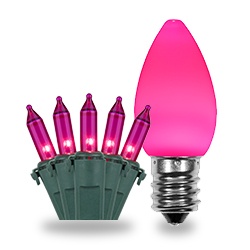
Christmas light bulbs - C7 and C9 are the cone-shaped bulbs most associated with Christmas displays. The C9 stands 3 inches tall from base to tip on an E17 intermediate base; the C7 is 2 inches base to tip on an E12 candelabra base, and the two are not interchangeable. Both are sold as individual replacement bulbs, in pre-matched sets with a stringer, or already wired onto a finished string. Globe bulbs in G30, G40 and G50 are the other common shape. In LED, bulbs are rated from 20,000 to 60,000 hours with no filament to burn out and draw up to 90% less power than incandescent. Incandescent bulbs produce the classic glow of a traditional Christmas at the lowest initial cost per bulb, but last 3,000 hours. Both come in transparent, opaque and faceted finishes.

Christmas string light sets - A string light set includes both the bulbs and the wire they mount on. Sets range from mini Christmas lights through specialty shapes to larger C-bulb sets, in bulb sizes including D5™, 5mm, T5, M5, G12, C6, C7 and C9. They run from as few as 10 lights to more than 100 on a single string. Wire colors come in green, white, black and brown, so the wire matches the surface it mounts on and blends in during daylight; commercial sets use heavier wire. Different projects call for different sets: battery-operated strings suit small decorations where an outlet isn't close, while LED sets connect end to end so you can safely run longer lines of light across rooflines, fences or large trees.

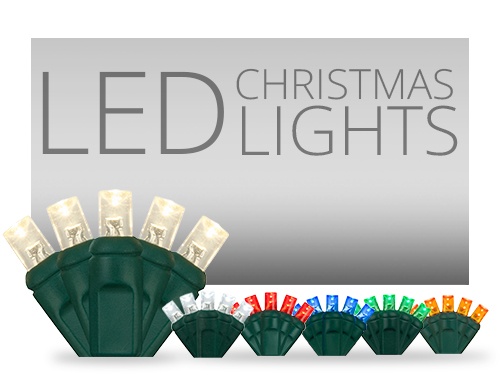
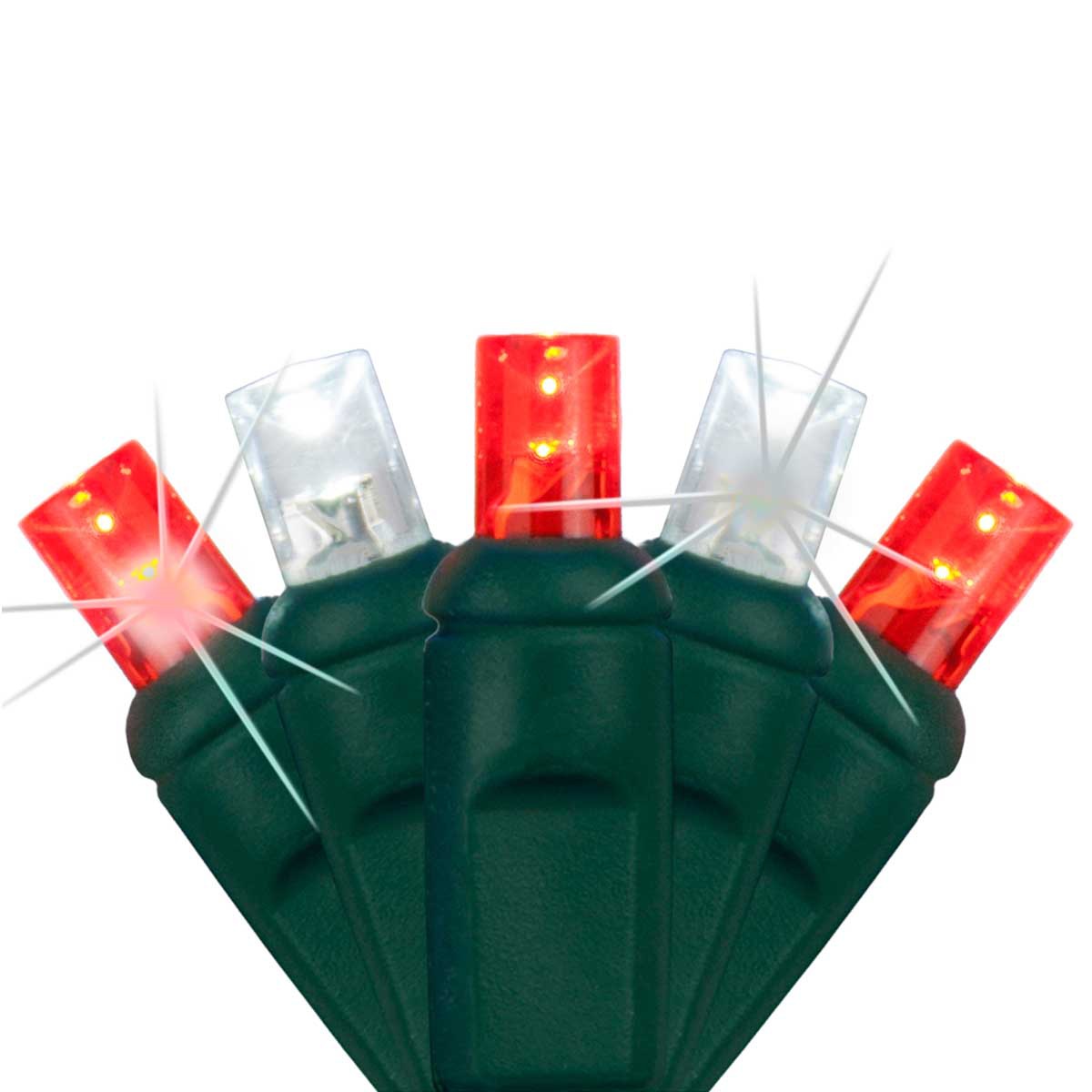
LED Christmas lights - LED lights are more versatile, durable and efficient than incandescent lights, which lets you build more impressive displays. The versatility comes from being able to connect longer lines of light end to end from a single outlet. LED lights also remain cool to the touch, so they're safe to use against wreaths, garland and live trees and around pets and children. Durability comes from having a shatterproof lens and no filament to burn out, so the same bulbs light a display season after season. And their energy efficiency shows up on the power bill and in what you don't have to buy: extra extension cords and accessories.

Commercial Christmas light sets - A commercial set is a kit: professional-grade bulbs pre-matched to the commercial-grade stringer built to carry them. Bulb color, wire color, and spacing are designed together, giving you a finished, coordinated look straight out of the box. Setup is tool-free, just screw in the bulbs and the set is ready to install. Bulbs are interchangeable, so you can change colors or replace bulbs without buying a whole new set. Heavy-duty 18-gauge commercial-grade wire reduces voltage drop so you can run longer light strings, which is what suits these sets to rooflines, driveways, streets and large properties.

Icicle lights - Icicle lights hang on drops of varying length from a horizontal wire, so the strand looks like a row of icicles. They are the best Christmas lights for gutters and eaves. Sets come in professional-grade LED or traditional incandescent, with Lux360™ D5™, 5mm wide-angle and M5 bulb styles in LED, and SoftTwinkle® options that fade in and out rather than blinking. Colors run from warm and cool white to blue, multicolor and holiday combinations. Curtain lights offer longer drops for a drape effect; Grand Cascade lights animate with a dripping motion.

Net lights - Net lights are string lights connected into a grid, so one piece covers a bush evenly instead of several strings woven through it. A standard 4'x6' net goes over most shrubs in under a minute, and a 4'x8' covers larger ones. They come in professional-grade LED or incandescent, with SoftTwinkle® options. StretchNet Pro® wraps tree trunks and columns instead: a stretchable cord expands to fit without measuring, and loop clasps hold the ends without zip ties.

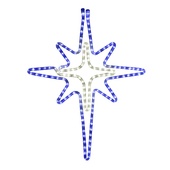
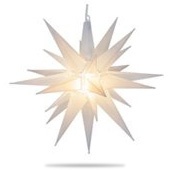
Star lights - at first, you may think this is self explanatory but it goes far deeper than you may realize. While most think about 5-point stars there are actually many variations of star lights.

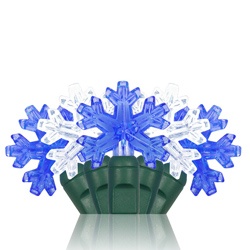
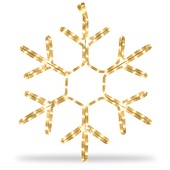
Christmas Snowflake Lights - Snowflake lights come in a large array of designs, made with rope light or LED strip light. Some are multicolor. They are usually hung, and they can also lie flat on a roof or wall for a two-dimensional display.

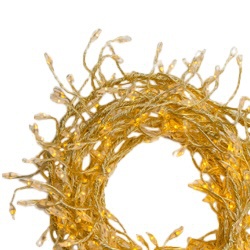
Fairy lights - Fairy lights are very small LEDs on a thin, flexible wire that can be shaped to fit most settings. They suit small decorations and close-up work like wrapping greenery or running along a mantel.

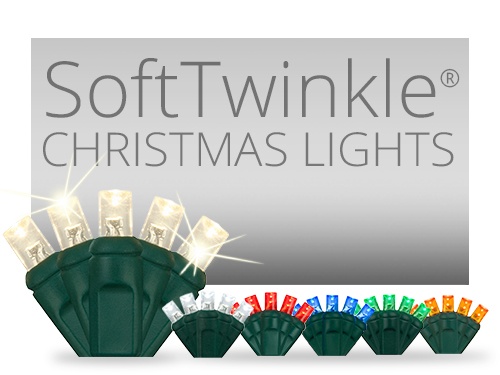
Twinkle lights and color change lights - Twinkle lights add movement to a display by turning individual bulbs on and off at set intervals. Color change lights shift between colors instead, either blinking from one to the next or transitioning smoothly, depending on the style. SoftTwinkle® is a sophisticated version, where each bulb fades in and out slowly and independently rather than blinking.

Garland lights - Garland lights are a thicker, intertwined series of string lights. They hang along mantels, wrap around columns, and outline doors and railings.

Lighted branches - Lighted branches are a diverse family of products for arrangements and scenes built around Christmas foliage. With bows and other complementary decor, they also work inside a Christmas tree the way floral picks and sprays do.

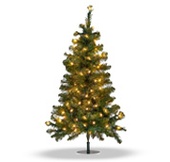
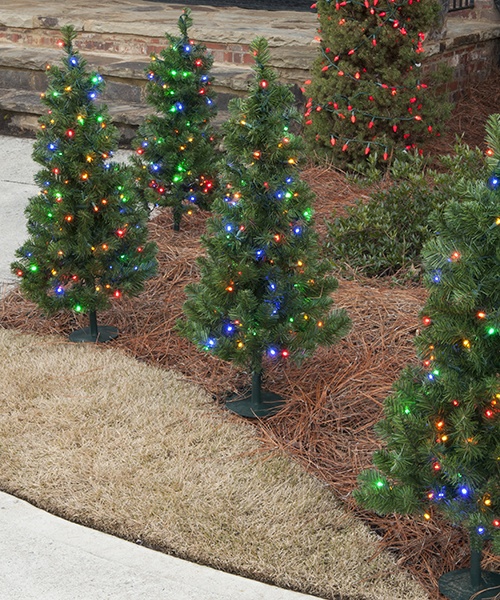
Walkway Christmas trees - Walkway Christmas trees are small outdoor-rated trees on a spike that presses into the ground. They set up quickly and line a path or a driveway, following its contours.

LED light show trees - LED light show trees are cone-shaped and pre-programmed with a series of light animations. They stand from 4 to 12 feet tall, work well in yard displays, and look best in groups.

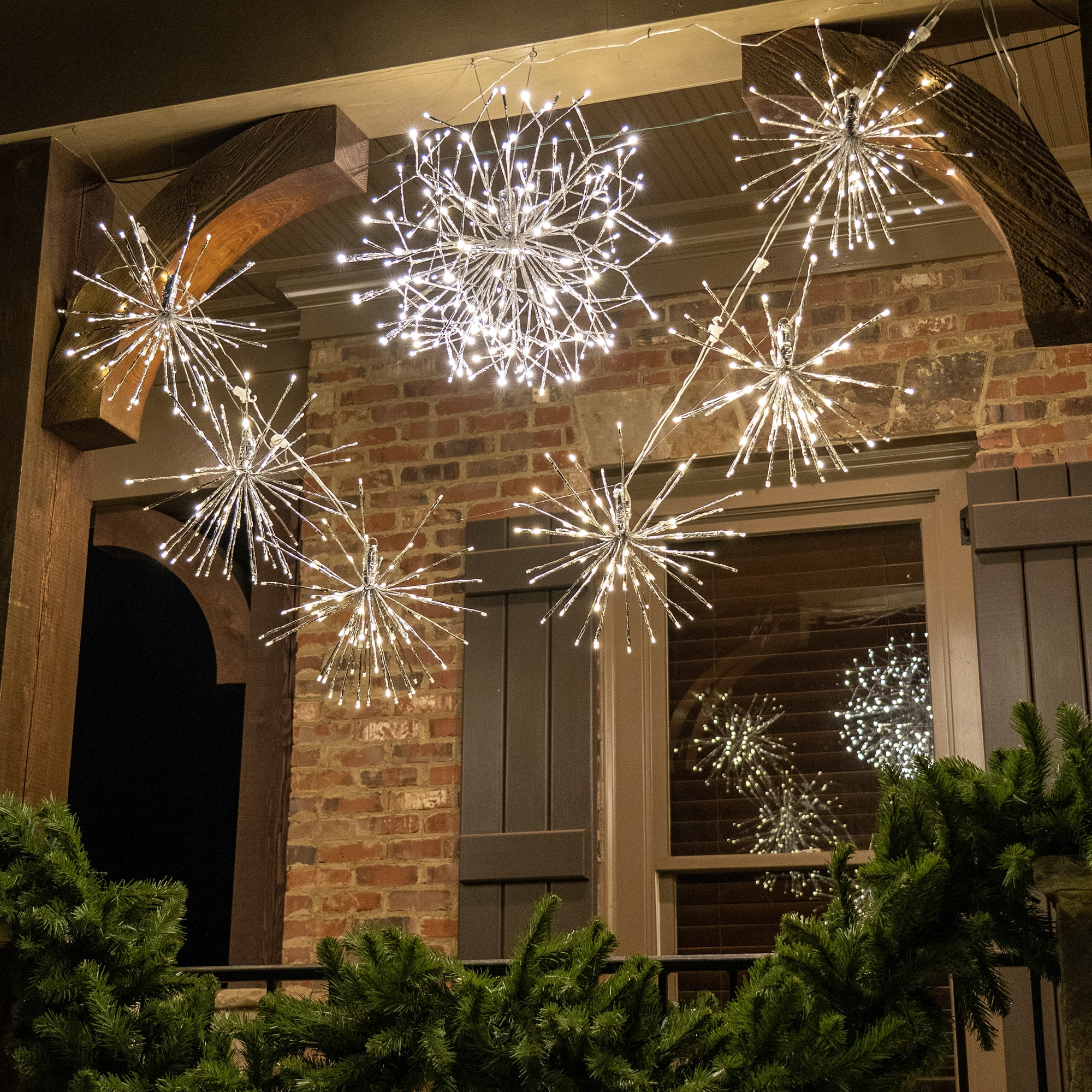
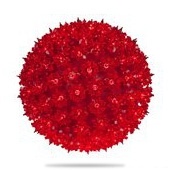
Christmas light balls -Christmas light balls are spheres of light in several varieties: starlight spheres that require no assembly or setup, just hang and plug in; LED mini light balls that fold flat for storage; and commercial-grade light balls on heavier frames. They can be hung or placed on the ground.
Pro Tip
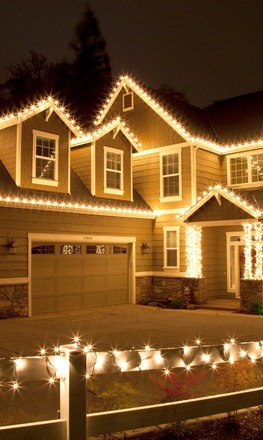
For a Christmas light display that looks professional, start with the foundation: C9 string lights along the roofline, icicle lights on the eaves, net lights over the bushes. Then set yours apart with snowflakes, stars or light balls suspended from tree branches, walkway trees down the path or light show trees in the lawn. These specialty pieces layer over your foundation at different distances from the street, making your home look designed rather than just decorated.
Frequently Asked Questions:
What are the different types of Christmas lights? Christmas lights come in a wide range of product types. The most common are C7 and C9 bulbs and light sets, mini lights, icicle lights and net lights. Beyond those are rope lights, star lights, garland lights, fairy lights, snowflakes, lighted branches, pathway lights, walkway trees, light show trees and light balls.
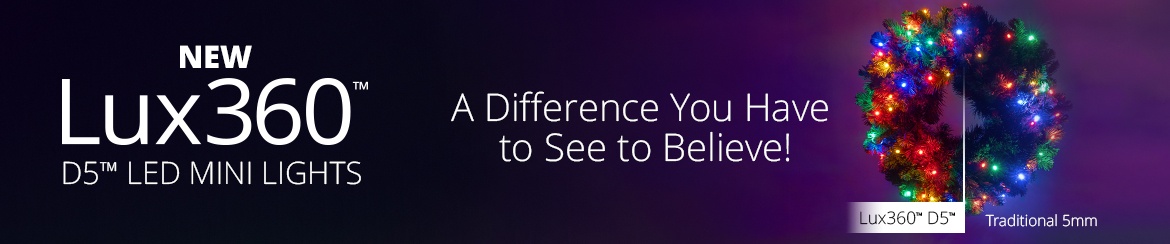
What size are Christmas light bulbs? Three sizes cover most Christmas light bulbs: C7, C9 and mini. The cone-shaped C7 measures 2 inches from base to tip and the C9 measures 3, large enough for rooflines, driveways and mature trees. Mini light bulbs range from Lux360 D5 bulbs and 5mm wide-angle conical bulbs to M5 and T5 tubular bulbs to specialized shapes like C6 (strawberry) and G12 (raspberry), small enough to wrap trunks, fill wreaths and light greenery.
What's the difference between LED and incandescent Christmas lights? Both are sold in most Christmas light types, so the choice rarely limits what you can buy. LED uses up to 90% less power and lasts many times as long, which lets you connect longer runs from one outlet and reuse the lights year after year. Incandescent costs less per bulb initially and gives a classic glow.
What kind of Christmas lights should I use where? Match the light to the surface. Rooflines and eaves take C9 lights or icicle lights; bushes and hedges take net lights; tree trunks and branches take tree wrap lights or mini lights; walks and drives take pathway lights; railings and windows take rope light or garland lights.
How do I choose Christmas lights for my house? Start with the space you want to light rather than the product. Walk the house and list what you want lit: the roofline, the walkway, the shrubs by the porch, the mantel, the tree. Each surface narrows the choice to a few product types, so you are choosing between a handful of options rather than everything at once.
What are the best Christmas lights? The best Christmas lights are the ones built to come back out year after year. Look at the joint where the bulb meets the base, since that is where most lights fail: nickel-plated bases on C bulbs resist corrosion, and one-piece molded construction on LED minis keeps moisture out. Full-wave rectified engineering holds a steady glow instead of flickering. A shatterproof lens survives the ladder and the storage bin, and commercial-grade wire stands up to harsh weather.
Do all my Christmas lights need to match? It depends. Color is worth planning: all white or a color scheme both work, as long as the display looks coordinated. Christmas Lights, Etc products are color-matched, so a warm white net matches a warm white icicle set. Bulb type is different. C9 bulbs on the roofline do not commit you to C9 everywhere else. Bulb finish matters too: faceted C9s on the roofline look better with faceted C9s in your pathway lights.
Where is the best place to buy Christmas lights? Specialty Christmas lighting retailers. They stock the full range year round, including commercial-grade sets, bulbs in every size and finish, and the accessories that tie a display together. Big-box stores carry a narrow selection for about a month a year. Online marketplaces sell year round, but rarely the same product two seasons running, or the replacement bulbs to match.